%20(8%20x%204%20in)%20(12).png)
The Somatic Benefits of Fascial Stretch Therapy Beyond Flexibility
Most people think stretching is just about improving flexibility. Yet, Fascial Stretch Therapy™ (FST™) offers much more than that. It is a unique, body-centered therapy that connects the nervous system, fascia, movement, and physical tension. This connection makes FST a powerful form of somatic therapy that can help people find relief from chronic tension and stress in ways traditional stretching cannot.
Understanding why FST feels different and how it supports the nervous system can open new doors for those seeking gentle, restorative movement and deeper stress and tension relief.
What Somatic Therapy Means
The word “somatic” relates to the body. Somatic therapy focuses on the link between physical sensations, emotional stress, nervous system regulation, and movement patterns. It recognizes that stress and trauma do not only affect the mind but also shape the body’s posture, breathing, muscle tone, and fascial tension.
For example, someone who has experienced trauma might unconsciously hold their shoulders tight or breathe shallowly. These physical patterns reflect how the nervous system stores stress. Somatic movement therapies aim to bring awareness to these patterns and gently guide the body toward relaxation and balance.
How Fascia and the Nervous System Connect
Fascia is a dense network of connective tissue that surrounds muscles, nerves, joints, organs, and blood vessels. This tissue is rich in sensory receptors and closely linked to the nervous system. Because of this connection, fascia plays a key role in how the body senses and responds to stress.
When the body experiences prolonged stress, it often develops protective tension patterns in the fascia. These patterns can cause:
A feeling of being “stuck” or trapped in tension
Constant muscle tightness without a clear injury
Restricted movement and shallow breathing
These symptoms show how trauma and fascia interact, creating physical barriers to comfort and ease.
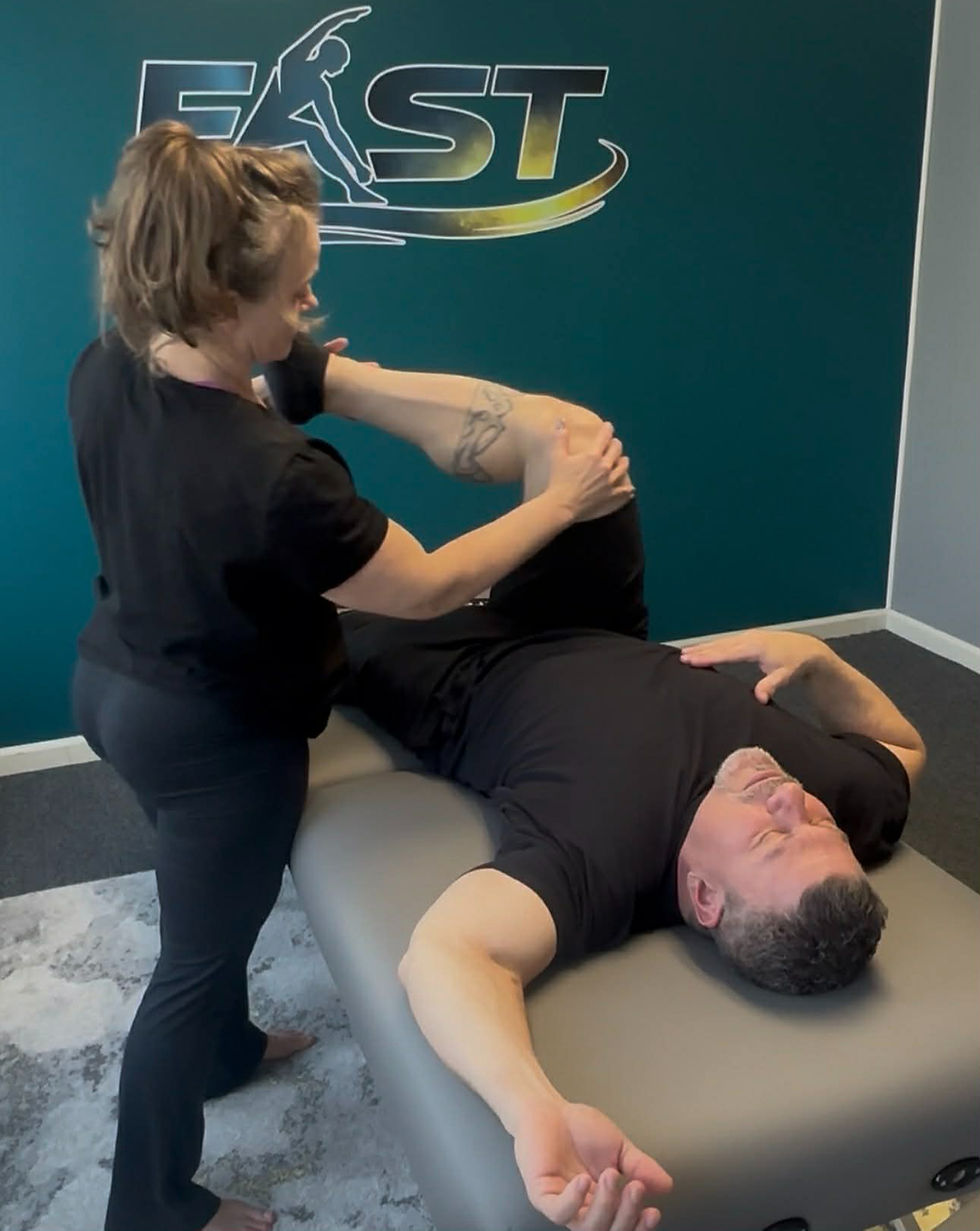
Gentle assisted fascial stretch helps release tension and improve movement.
Why Fascial Stretch Therapy Is More Than Stretching
Unlike aggressive stretching, FST uses slow, guided movements combined with breath awareness and nervous system regulation. This approach helps the body move toward a parasympathetic nervous system state, often called “rest-and-regulate.” This state supports healing and relaxation.
Key features of FST include:
Slow, guided movement that respects the body’s limits
Breath awareness to support nervous system regulation
Joint decompression to relieve pressure and improve mobility
Fascial mobility to release tension and improve tissue health
Client comfort and safety as a priority
These elements make FST a form of body-centered therapy that addresses both physical and nervous system needs.
How Nervous System Regulation Enhances Stress and Tension Relief
The nervous system plays a crucial role in how the body holds or releases tension. When people feel safe and supported during movement, their nervous system is more likely to relax. This relaxation allows the fascia to soften and the muscles to release protective tension.
For example, a client who experiences chronic neck tightness may find that FST sessions not only improve their range of motion but also reduce feelings of anxiety or stress. This happens because the therapy supports nervous system regulation, helping the body shift from a fight-or-flight state to a calm, parasympathetic state.
Practical Benefits of Fascial Stretch Therapy for Somatic Movement
People dealing with chronic tension or stress often find FST helpful because it:
Improves overall movement quality without pain
Encourages deeper breathing and better posture
Reduces chronic tightness that resists traditional stretching
Supports emotional release through body awareness
Helps the nervous system reset to a more balanced state
For instance, someone with tight hips from sitting all day might experience not only increased flexibility but also a sense of emotional lightness after FST sessions. This shows how fascia therapy can influence both body and mind.
What to Expect from a Fascial Stretch Therapy Session
During an FST session, the therapist gently moves the client’s body through specific stretches while paying close attention to breath and comfort. The client remains relaxed and supported, allowing the nervous system to regulate naturally.
This process differs from typical stretching because it is not about pushing limits but about exploring movement with awareness. The therapist may also use techniques to decompress joints, which can relieve pressure and improve function.
Moving Forward with Somatic and Fascial Stretch Therapy
If you are exploring ways to manage chronic tension or want to support your nervous system through movement, consider trying Fascial Stretch Therapy. It offers a gentle, effective path to better body awareness, improved fascial health, and deeper stress and tension relief.
By focusing on the connection between fascia and nervous system, FST helps the body move toward balance and ease. This makes it a valuable addition to any somatic therapy or body-centered wellness practice.


Comments